It’s no secret that first responders and healthcare professionals carry an incredible mental and emotional load.
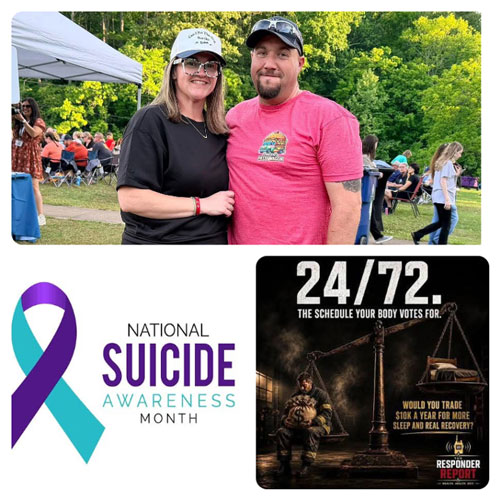
We see things most people will never have to see, and sometimes those things don’t just disappear when the shift ends and we walk through the front door.
I won’t speak for every first responder, but I can speak for myself.
My eyes have seen more than most people will see in a lifetime.
And through it all, my wife has been there.
She has put up with the long shifts, the extra shifts, missed time together, the silence while I stare at a blank TV screen, the quiet rides to supper, the mood swings, the exhaustion, and so much more that comes with loving someone who works in this profession.
That’s something we don’t talk about enough.
Mental health in first responders doesn’t just affect the first responder. It affects the people who mean the most to us.
Being married to a first responder isn’t always the glamorous life people may think it is. Our spouses and families carry part of this weight too. They may not have been on the call, but sometimes they live with the aftermath of it right alongside us.
That’s why I believe changes that improve work-life balance matter.
Our county allowing LCEMS to transition from a 24/48 schedule to a 24/72 schedule is more than simply getting another day off.
It gives us time to actually decompress.
Time to recover after a difficult shift.
Time to sleep.
Time with our spouses and children.
Time to be a husband, wife, dad, mom, friend, or simply a human being before putting the uniform back on.
I truly believe this change has the potential to save lives in more ways than one. Better-rested crews can mean safer crews. Better mental health can mean better morale. More recovery time can mean less burnout. And ultimately, I believe all of those things can contribute to better patient care for the citizens we serve.
We spend our careers answering calls when someone else is having the worst day of their life. We have to remember that it’s okay for the people answering those calls to need help too.
Check on your first responders.
Check on their spouses.
Check on the strong ones.
And if you’re the one struggling, please don’t convince yourself that everyone would be better off without you. Talk to somebody. Your partner, your spouse, your crew, your supervisor, a counselor, a chaplain—somebody.
Asking for help does not make you weak. Sometimes it takes more courage to say “I’m not okay” than it does to run toward another emergency.
This Suicide Prevention Month, remember the person underneath the uniform.
Behind every badge, every radio, every ambulance, every fire truck, every patrol car, and every set of scrubs is a human being.
And that life matters too. ��
Take care of the ones who spend their lives taking care of everyone else.